Phlegethon - Milczenie (2018)
PHLEGETHON - MILCZENIE
Dresden, 2018
(site-specific public project since 2005-)
Above: excerpt from the overhead documentation of live performance by the artist at Altmark Square, Dresden, Germany, 2018, as part of WOD Initiative Weltoffenes Dresden, a series of public projects in containers, commemorating liberation/destruction of Dresden in 1945. Monika Weiss’ project was curated by Christiane Mennicke-Schwarz for Kunsthaus Dresden.
Installation in the container, two live performances (inside and outside the container): German high literature books and musical scores published in Germany before 1945, artist’s drawings on book pages, charcoal, graphite, video projection, sound composition, performance
ESSAY
Phlegethon is the Greek River of Fire, and the Polish word milczenie means “silence and inability to convey." The title has multiple meanings: The Nazis occupying Poland and other countries in Europe during World War II used fire to silence voices and take lives. In the decades since those horrific actions, a silence has persisted as many people find it difficult to convey or to admit that these atrocities occurred on their own territory. Last, there are no words or ways to explain this devastating extinguishing of life. Weiss's focus on the materiality and tactility of the books calls to mind the method of dialectical materialism practiced by the Frankfurt School and the mysticism of Walter Benjamin in particular to combat fascist ideology. In their thinking, the bodily, sensory response to material and form was an effective counter to the Enlightenment's total embracing of thought, reason and mind over body.
- Katherine Carl, Drawing Cosmos, in Monika Weiss-Limen II, Kentler International Drawing Space, Brooklyn, New York, 2005
To read full essay click here.
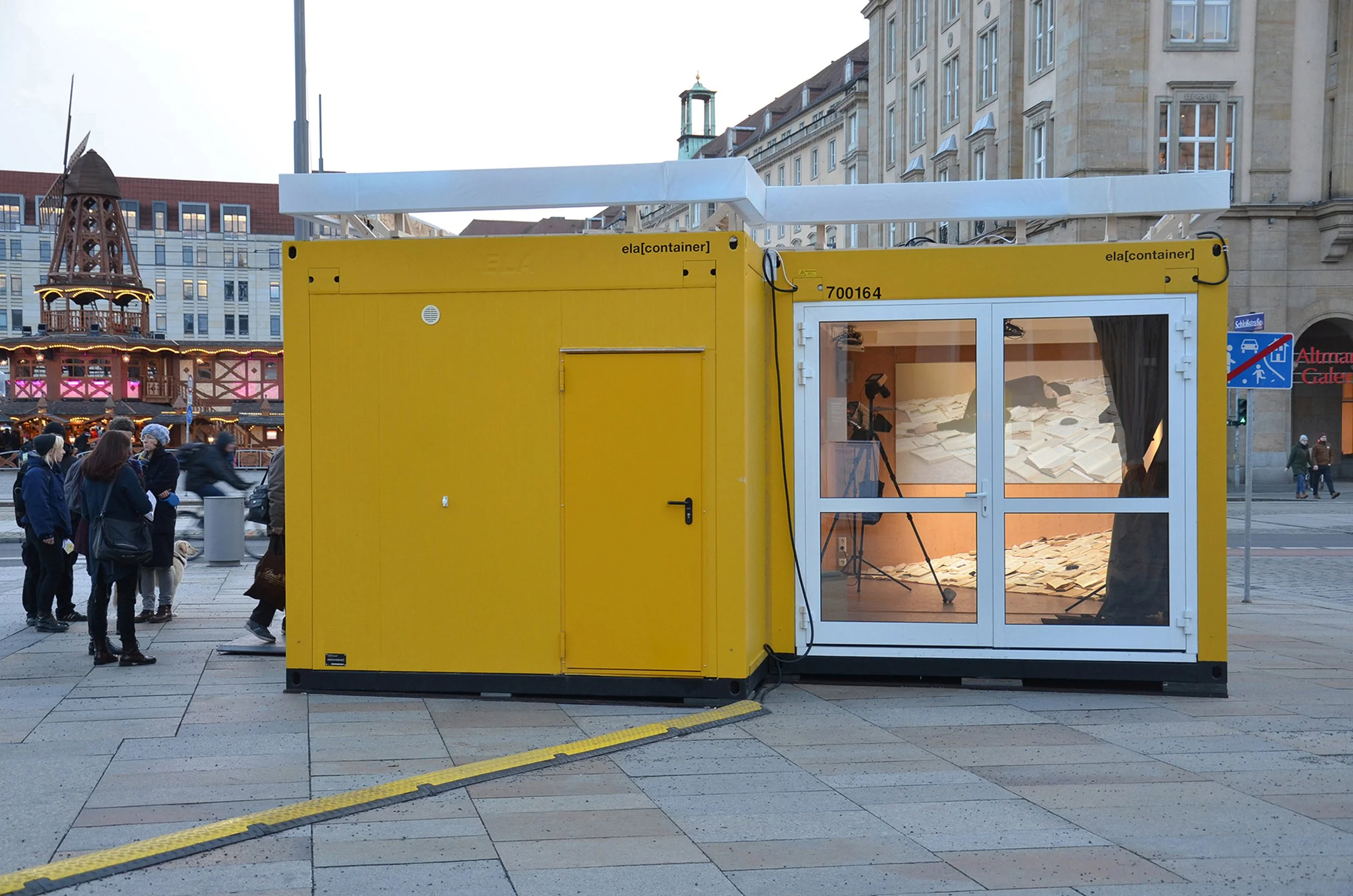
Monika Weiss, Phlegethon-Milczenie, 2018. Photography courtesy Kunsthaus Dresden
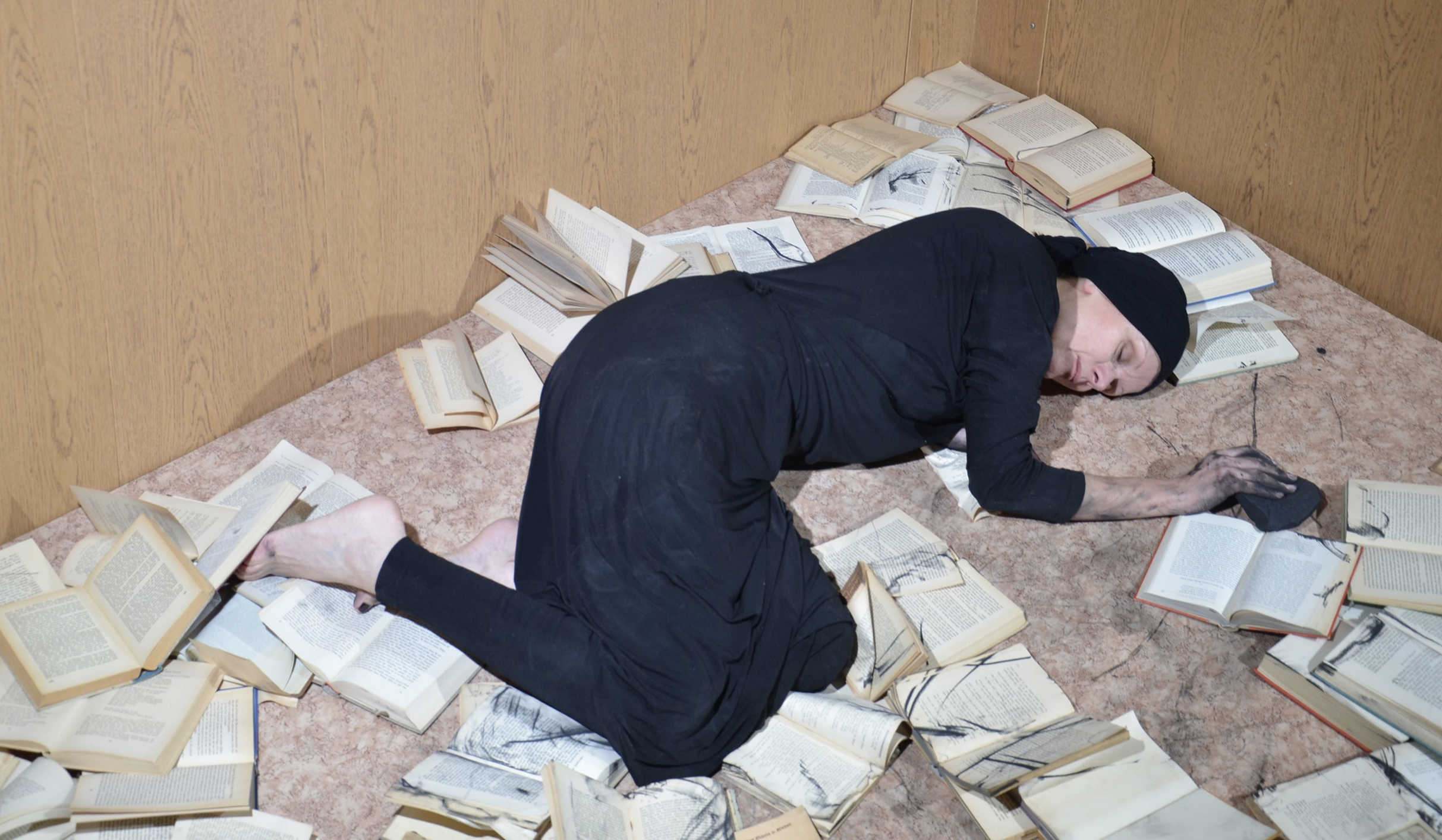
Monika Weiss, Phlegethon-Milczenie, 2018. View of the performance inside the container. Photography courtesy Kunsthaus Dresden
ESSAY - HISTORY OF THE PROJECT
In 2004 the Intergalerie in Potsdam, Germany invited Weiss to propose an exhibition that would open in 2005. Phlegethon-Milczenie was an installation of rare books containing literature, philosophy, and music, a performance by the artist on those objects, a projection of the installation, and a multi-channeled sound piece. Phlegethon, the first word in the compound title, means River of Fire in Greek mythology, and Milczenie, the second word, is Polish and means “silence” or “an inability to speak.” The audience entered the exhibition in the first gallery, “Phlegethon,” where Weiss’s sound composition was projected together with a projection of her performing on the octagonal arrangement of open books in the second gallery, “Milczenie.” In the Milczenie performance, which the artist repeated several times during the duration of the exhibition, she moved slowly and silently across the books with her eyes closed, in a meditative state, making marks with graphite and charcoal sticks around her body. Some of the books, by mostly German writers, philosophers, and composers, contained works that were either revered or destroyed by the Nazis. Their destruction depended on whether the regime deemed the authors degenerate or racially stained, and therefore not worthy contributors to high Germanic culture (…)
During the two weeks following the opening, the artist selected fragments of raw footage from the camera recordings and edited them into the first two parts of the video. Weiss then added the third part, the scene of Thomas Mann’s book, burning, which she had completed in New York. The final 18-minute video, determined by the duration of the sound composition, was subsequently projected throughout the exhibition in the “Phlegethon” room, with the exception of the instances when the artist returned to perform on the books. At those times the projection would again show the live view from the "Milczenie" room.[6] Weiss’s comments are notable in this regard: “There is a counterpoint quality of sound and image in this work in which I combined images of my body with the sounds of pages burning and images of fire with the sound of voices. I explore the important relationship between drawing and sound/music, focusing on the time-based and rhythmic qualities of drawing and the spatial and sculptural properties of music/sound. Both relate to the language of the body.” [7] These tropes elicit a play of time, memory, and a historical archive (…)
-Julia P. Herzberg, Monika Weiss 's Language of Lament: History, Memory, and the Body, in Recall: Roland Schefferski & Monika Weiss, Galeria BWA Zielona Góra & Muzeum Ziemi Lubuskiej, Poland, 2014
To read full essay click here.
EXHIBITIONS
Remembering & Forgetting, #WOD Cultural Festival in Containers, City of Dresden. Monika Weiss public project was curated by Christiane Mennicke, Kunsthaus Dresden, 2018
Polyphony of Images, curated by Monika Fabijanska, Consulate General of the Republic of Poland in New York, 2006
Monika Weiss: Between Body and History, curated by Samuel Lallouz, Galerie Samuel Lallouz, Montréal, 2007
Forms of Classification: Alternative Knowledge and Contemporary Art, curated by Cecilia Fajardo-HillCIFO Cisneros-Fontanals Art Foundation, Miami, 2006-2007
Von der Abwesenheit des Lagers, Curated by Christina Beifuss, Katrin Krahl, Maja Linke, Christiane Mennicke, Kunsthaus Dresden, Dresden, 2006
Codes of Culture: Video Art from 7 Continents, Curated by Nina Colosi, Streaming Museum, arteBA, Buenos Aires, 2006
Monika Weiss: Five Rivers, curated by Susan Hoeltzel, Lehman College Art Gallery (CUNY), Bronx, New York, 2005-2006
Monika Weiss: Phlegethon-Milczenie, curated by Erik Bruinenberg, Intergalerie, Potsdam, Germany, 2005
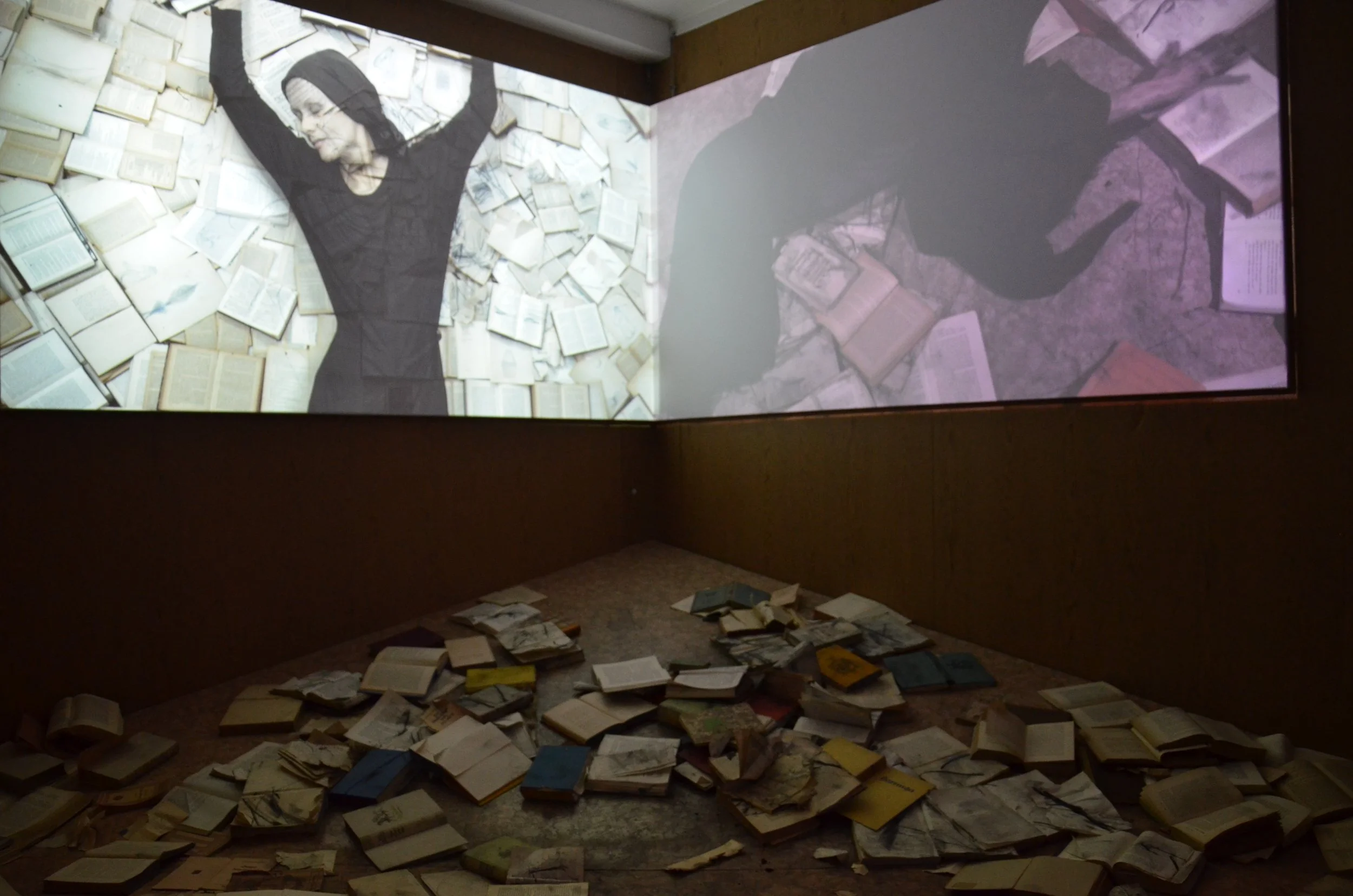
Monika Weiss, Phlegethon-Milczenie, 2018. View of the installation inside the container. Photography courtesy Kunsthaus Dresden
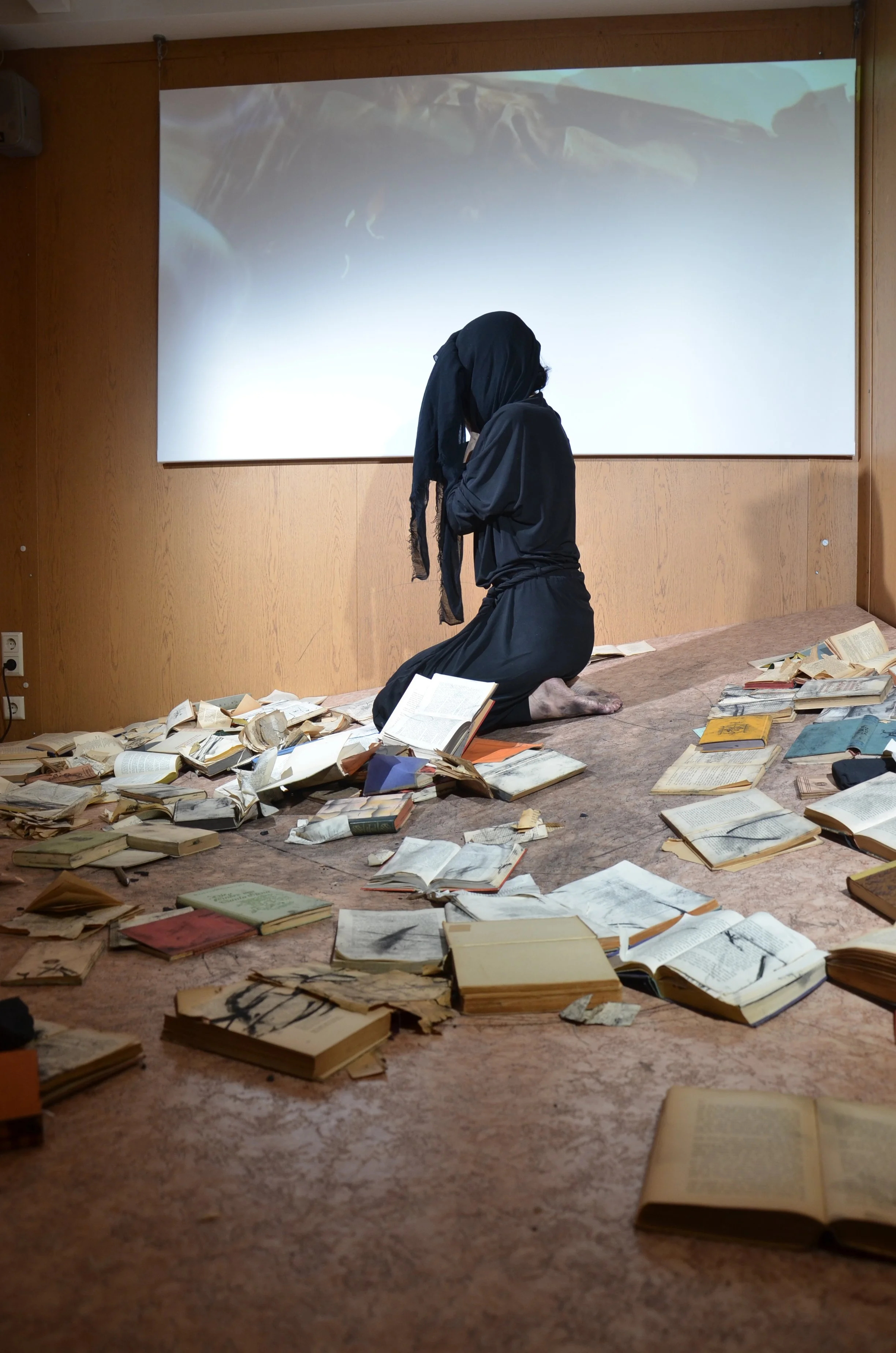
Monika Weiss, Phlegethon-Milczenie, 2018. View of the performance inside the container. Photography courtesy Kunsthaus Dresden
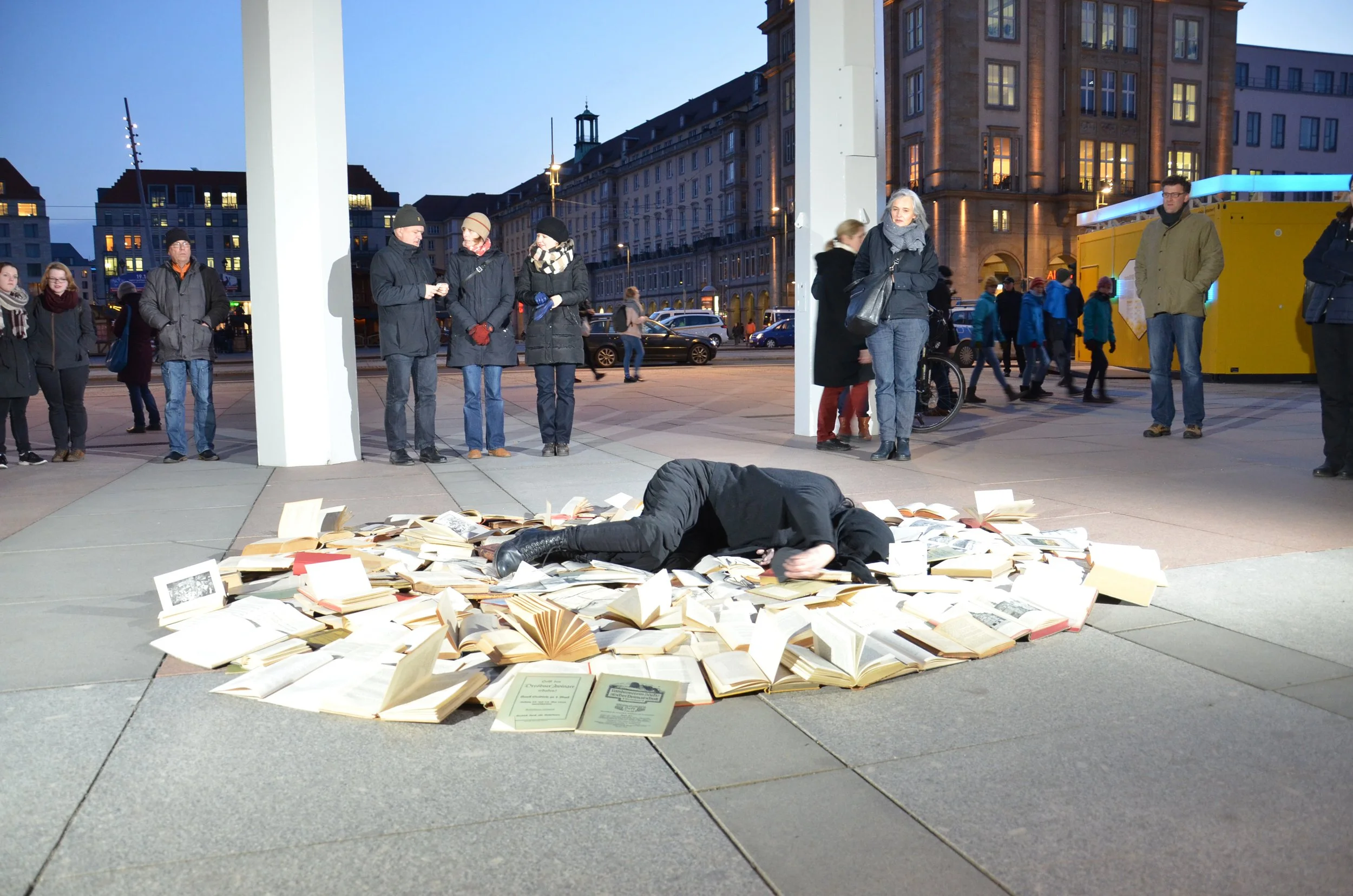
Monika Weiss, Phlegethon-Milczenie, 2018. View of the performance outside the container. Photography courtesy Kunsthaus Dresden
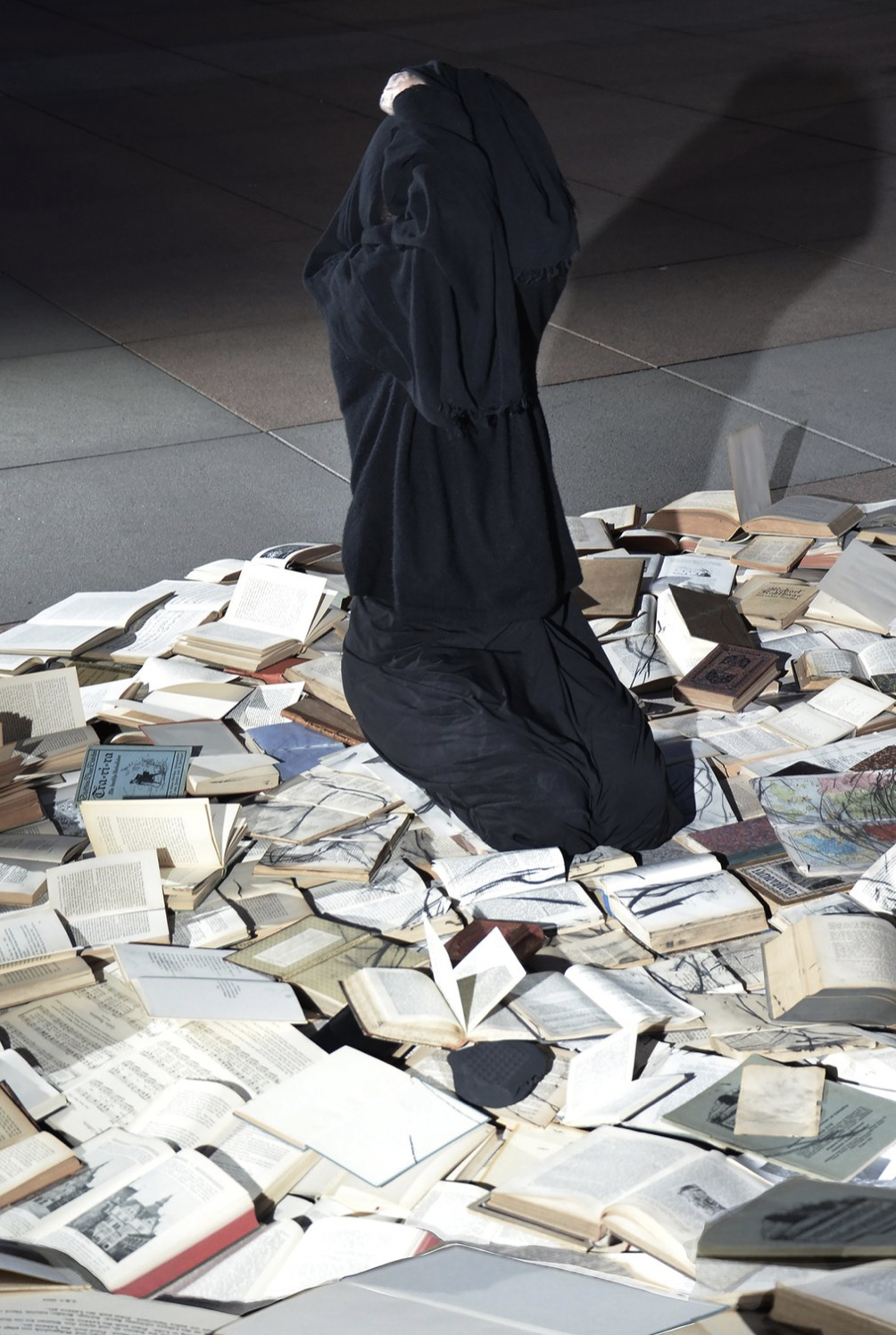
Monika Weiss, Phlegethon-Milczenie, 2018. Photography courtesy Kunsthaus Dresden
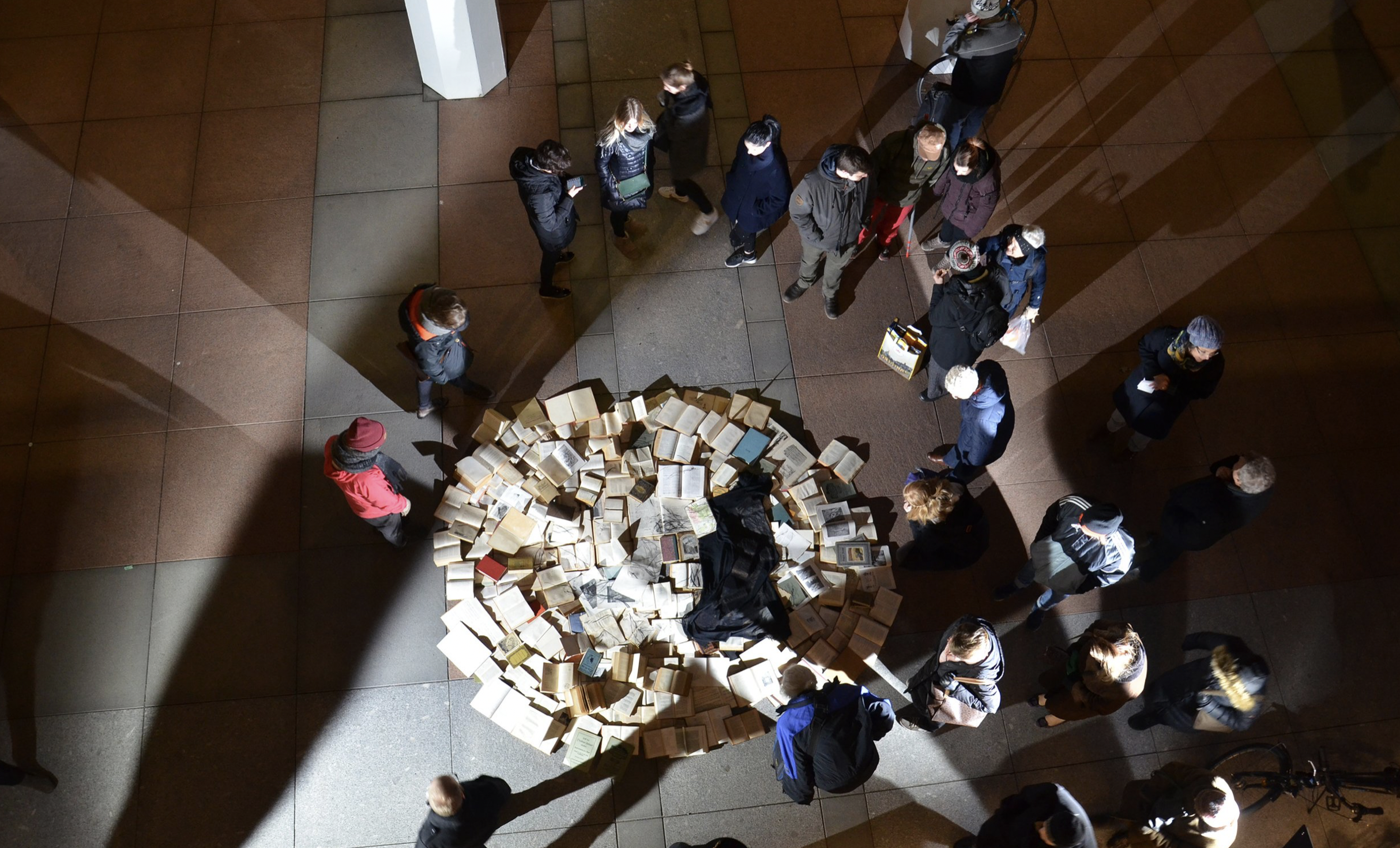
Monika Weiss, Phlegethon-Milczenie, 2018. Photography courtesy Kunsthaus Dresden