Malleus - Medusa (2026)
above: excerpt from Malleus-Medusa, 2026 [to hear the sound press the sound icon located in the lower right corner of the moving image]
malleus - medusa
2026
music, sound and film composition
22 minutes 48 seconds
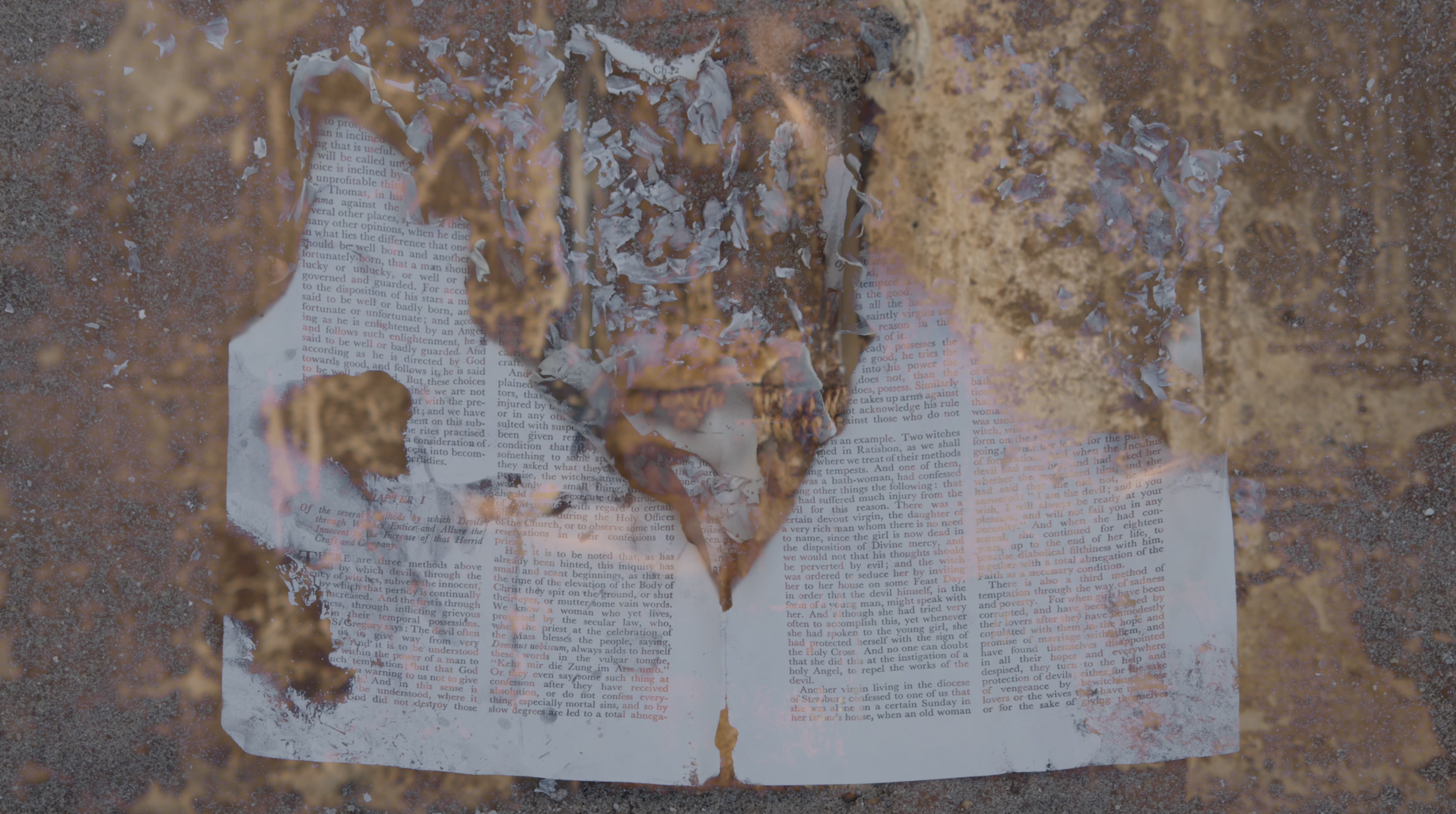
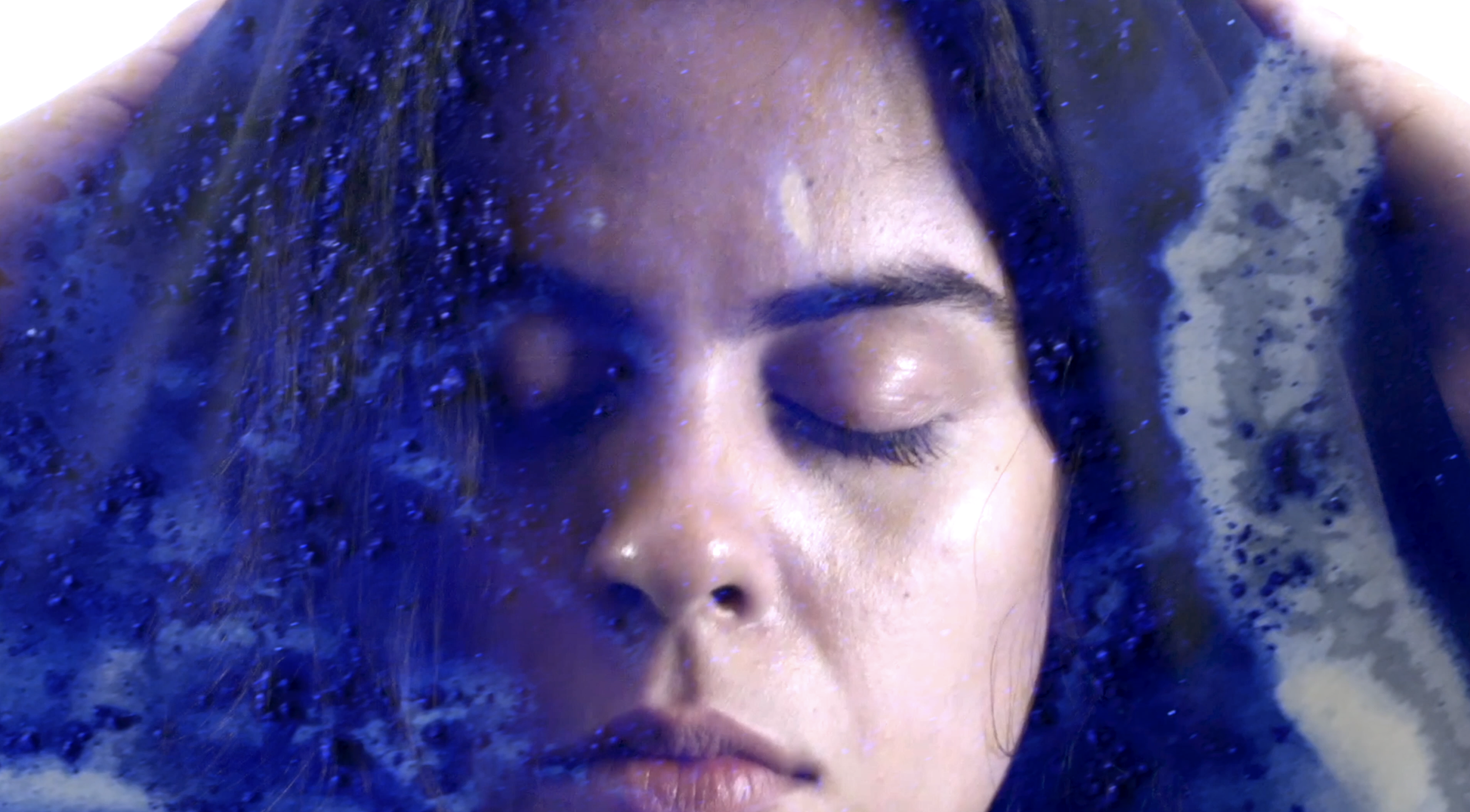
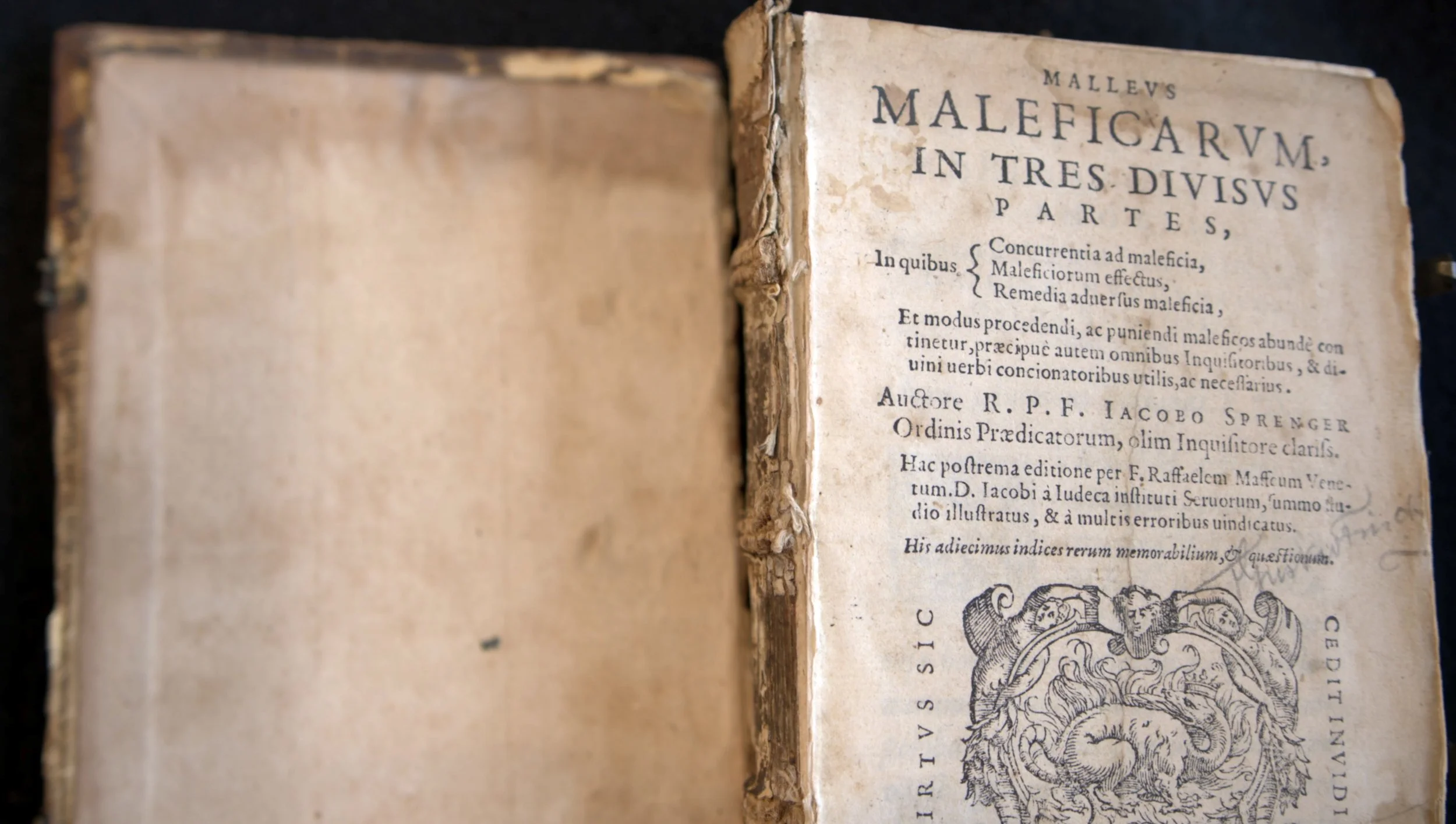
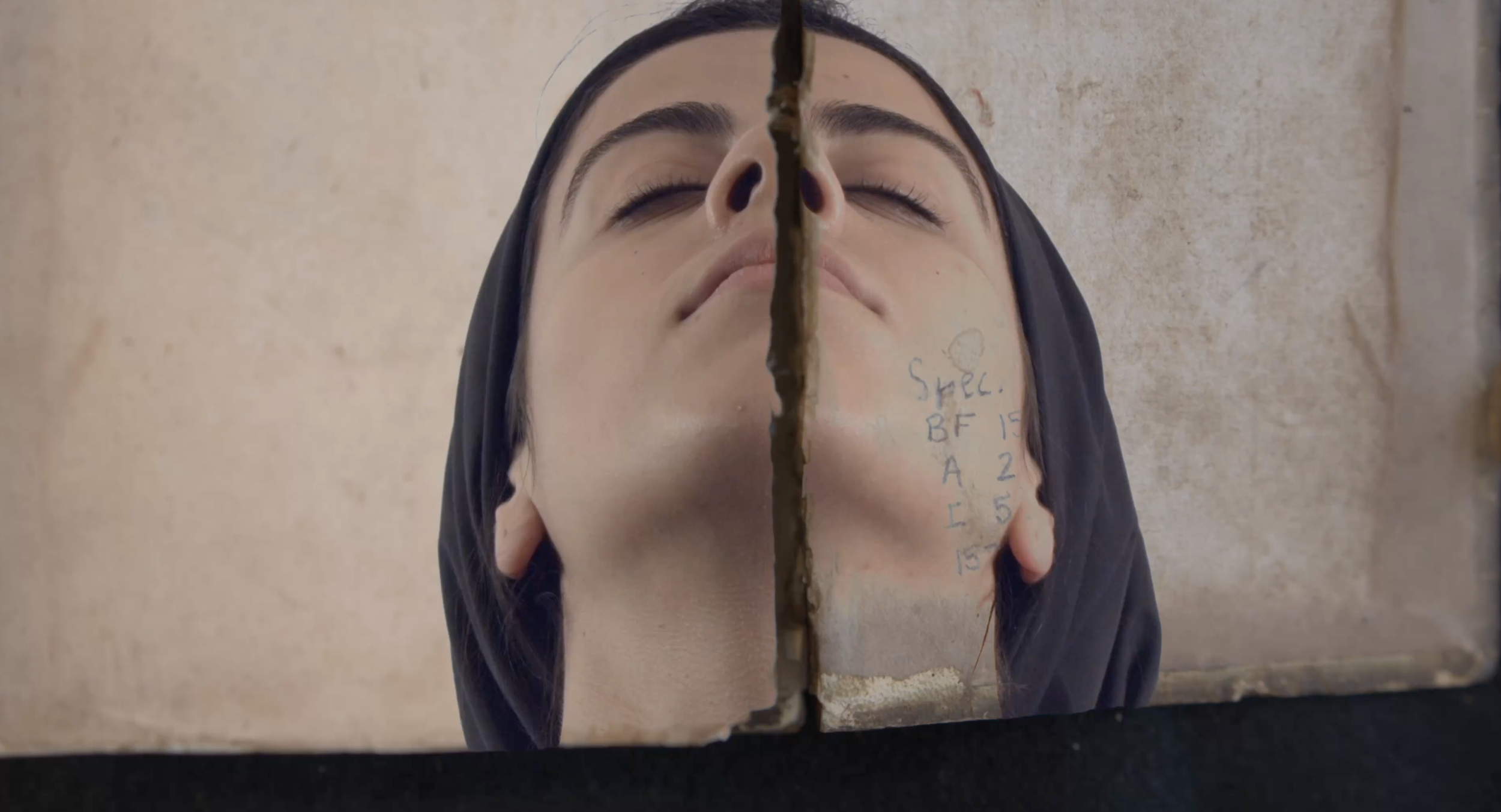
Malleus-Medusa (2026) is an experimental film and music/sound composition created in response to Malleus-Maleficarum, a 15th century legal and practical guide for inquisitors on methods of torture, prosecution, and execution of women, which became the standard legal text on women and witchcraft. Monika Weiss’ ecofeminist approach relates the oppression of women with the oppression of lands, cultures and the environment. The artist composed the music that includes vocal enactment of the poem Aletheia (Girl in River Water), 2005, by the late Meena Alexander (1951-2018), a world-renowned poet and Weiss’ friend. Conceived as a sonic and moving image meditation, Weiss’ short film opens with the shadow of an anonymous woman cast over the pages of Malleus Maleficarum. At some point, the figure morphs into a close-up of a face, suggesting Medusa of Greek myth.
Weiss creates a polyphonic and rhythmic sound environment, reframing Alexander’s poem as layered speech, often deconstructing the sentences into repetitive singular words which echo one another. The speaking voice is eventually overcome by a second voice, singing and lamenting without words. This dual vocal composition is further layered over rhythmic sounds that resemble explosions. Several film sequences are filmed by an overhead camera, with the artist appearing laying atop the book pages. In other moments the artist’s abstract drawings appear in the film juxtaposed with pages from the book, together resembling burned lands. The resulting image and sound strata create a visceral and sonic density akin to remnants of a battlefield.
Malleus-Maleficarum left a trail of legacy of oppression against women still present in various forms in contemporary Western culture. The artist, who first read the book over 20 years ago in her native Poland, points to the book’s long-term influence and the misogyny rampant both then and now. This torture manual was a bestselling book for over a century, going through multiple editions and translations. Scholars estimate that approximately 110,000 trials were held in Europe between 1450 and 1750, with half of the trials ending with execution, during a period when religious organizations held sway over the masses, backed patriarchal rule, and played an important role in the everyday lives of citizens. The artist chooses Malleus Maleficarum to point at the long-standing legacy of patriarchal structures of power and the ongoing colonizing of women in contemporary culture and law.
In 2024, the first part of Malleus-Medusa (work in progress) was presented as part of the exhibition EndGame at WhiteBox, New York, where it was curated by Yohanna M Roa. In 2026 the full work premiered at the Goethe-Institut New York, where it was curated by Natasha Chuk. Special thanks to Goethe-Institut New York curator, Zach Feldman.
CREDITS
Director: Monika Weiss
Composer: Monika Weiss
Camera/Montage: Monika Weiss
Soprano Voice: Kelly Beekman
Singing Voice: Mary Kate Charles
Speaking Voices: Disha Harjani, Monika Weiss
Movement Choreography: Monika Weiss
Movement Performers: Madeline Aleman, Disha Harjani, Monika Weiss
Voice Recording: Jeff Allen, Lucius Rawley
Sound Mastering: Paul Geluso
Book Burning Technical Oversight: Jon Young
Book: Malleus Maleficarum (1486) by Heinrich Kramer
Poem (Voice): Aletheia (Girl in River Water) (2005) by Meena Alexander
Text (Written): Excerpts from Malleus (2026) by Monika Weiss
The 1574 Venice edition of Malleus Maleficarum was filmed at the Julian Edison Department of Special Collections,
Washington University Libraries. Special thanks to Cassie Brand, Curator of Rare Books.
Aletheia (Girl in River Water) (2005) by Meena Alexander (1951–2018) was written after seeing the performance Lethe Room by Monika Weiss. The poem was first published in the exhibition catalogue Monika Weiss: Five Rivers (Lehman College Art Gallery / Les Editions Samuel Lallouz, Montreal, 2005) and subsequently in Quickly Changing River. Copyright ˝ 2008 by Meena Alexander. Published 2008 by Northwestern University Press. All rights reserved.
Special thanks to:
Goethe Institut-New York
Harvestworks Digital Media Arts Center, New York
WhiteBox, New York
BRIC Art Media, Brooklyn, New York
Julian Edison Department of Special Collections, Washington University Libraries and Sam Fox School of Design & Visual Arts at Washington University in St Louis
ExhibitionS
EMBODIED VOICES & CRITICAL NARRATIVES, Goethe-Institut New York, 2026
Artists: Monika Weiss and Vanessa Gravenor. Moderated by Natasha Chuk. Monika Weiss’ work in the exhibiiton: Malleus-Medusa, 2026
EndGame, WhiteBox, New York, 2024
Artists: Crackhead Barney, Terry Berkowitz, Tania Candiani, Peter Cramer, Jim Costanzo, Nate Dallimore, Dirty Churches, Jason File, Noah Fischer, Carla Gannis, Guerrilla Girls, Joshua Harris, Pablo Helguera, G.H. Hovagimyan, John Jackson, Enrique Ježik, Nina Leo and Moez Surani, Ferran Martin, Mark Stephen Meadows, Alex Melamid, Jason Mena, Ricardo Miranda Zúñiga, Simonetta Moro, Ivan Navarro, William Powhida, Lorenzo Pace, Paris 68 Redux, Pasha Radezski, Shama Rahman and Olive Gingrich, Duke Riley, Arlene Rush, Avelino Sala and Eugenio Merino, Franck Saïssi, Raphaele Shirley and Al Ramos, Gregory Sholette, Federico Solmi, Alesha Stupin, Rob Strati, The29.art, Jon Tsoi, Jack Waters, Monika Weiss, Phyllis Yampolsky. Curators: Ali Hossaini, Anthony Haden-Guest, Juan Puntes, Marat Guelman, Noah Fischer, Raul Zamudio, Stephen Zacks, Yev Gelman, Yohanna M Roa. Monika Weiss’ works in the exhibition: Malleus-Medusa (Work in Progress), 2024, Lethe, 2022
FILM STILLS