BIO
BIO
[BIO w języku polskim poniżej]
Monika Weiss is a Polish-American interdisciplinary artist and sound composer who creates performance-based installations, films, musical compositions, public projects, sculptures and drawings. Her works are included in public collections such as Frost Art Museum, CIFO Cisneros Fontanals Art Foundation, and CSW Zamek Ujazdowski. Her recent projects include the sound sculpture Metamorphosis-Przemiana, which joined the permanent collection of the Centre of Polish Sculpture in Orońsko in 2024; a sister version of this installation was presented at Laumeier Sculpture Park (2024–2025). Since 2023, documentation of Weiss’s work and related correspondence has been held at the Archives of American Art, Smithsonian Institution, as part of art historian Julia P. Herzberg's papers.
Born and educated in Warsaw, Monika Weiss has been based in New York since 2000. Working with a choreography of "slow time"¹ and creating site-specific sonic resonances—often originating from her piano improvisations—Weiss’ work explores collective memory and trauma, frequently inviting other women performers to interpret her choreography of slow movement and her vocal music. Rooted in archaic rituals of lamentation amd emphasizing the communal gesture of presence, her practice forms a poetic response to history and mythology. Forthcoming is a public project is Nirbhaya—a monument/antimonument to victims of gender-based violence, planned for Dag Hammarskjöld Plaza near the United Nations Headquarters. In early 2026, the Streaming Museum premiered her multidisciplinary work Arkhe—The Lost Canto. For her contributions to the cultural landscape, in 2026 the artist was honored as a Woman of Distinction by the New York State Assembly (73rd District), representing the community that includes the United Nations.
The artist’s career is documented in a 2021 monograph featuring essays by British art historian Griselda Pollock and The Met curator Mark McDonald. Weiss’ work has been showcased at leading institutions worldwide, including the Whitney Museum, Frost Art Museum, North Dakota Museum of Art, Museo de la Memoria y los Derechos Humanos, Frauenmuseum, Kunsthaus Dresden, Stavros Niarchos Foundation, Streaming Museum, CSW Zamek Ujazdowski, and WhiteBox. The artist holds a professorship at the Sam Fox School of Design & Visual Arts at Washington University in St. Louis. wAs part of the Artists on Artworks series, The Metropolitan Museum of Art released a 2021 film in which Monika Weiss analyzes trauma and gesture in the graphic work of Francisco Goya through the lens of her own intermedia practice. While primarily known as a visual and sound artist, Weiss has continued to work with music over the years. In 2022, the label Infrequent Seams released her album, Monika Weiss – Metamorphosis/Nirbhaya.
Note:
The term "slow time" was first used to describe the artist’s work by Guy Brett in his essay on her art "Time Being," first published in the monograph Monika Weiss: Five Rivers (Lehman College Art Gallery, 2005) and later republished in Brett’s The Crossing of Innumerable Paths: Essays on Art (Ridinghouse, 2019).
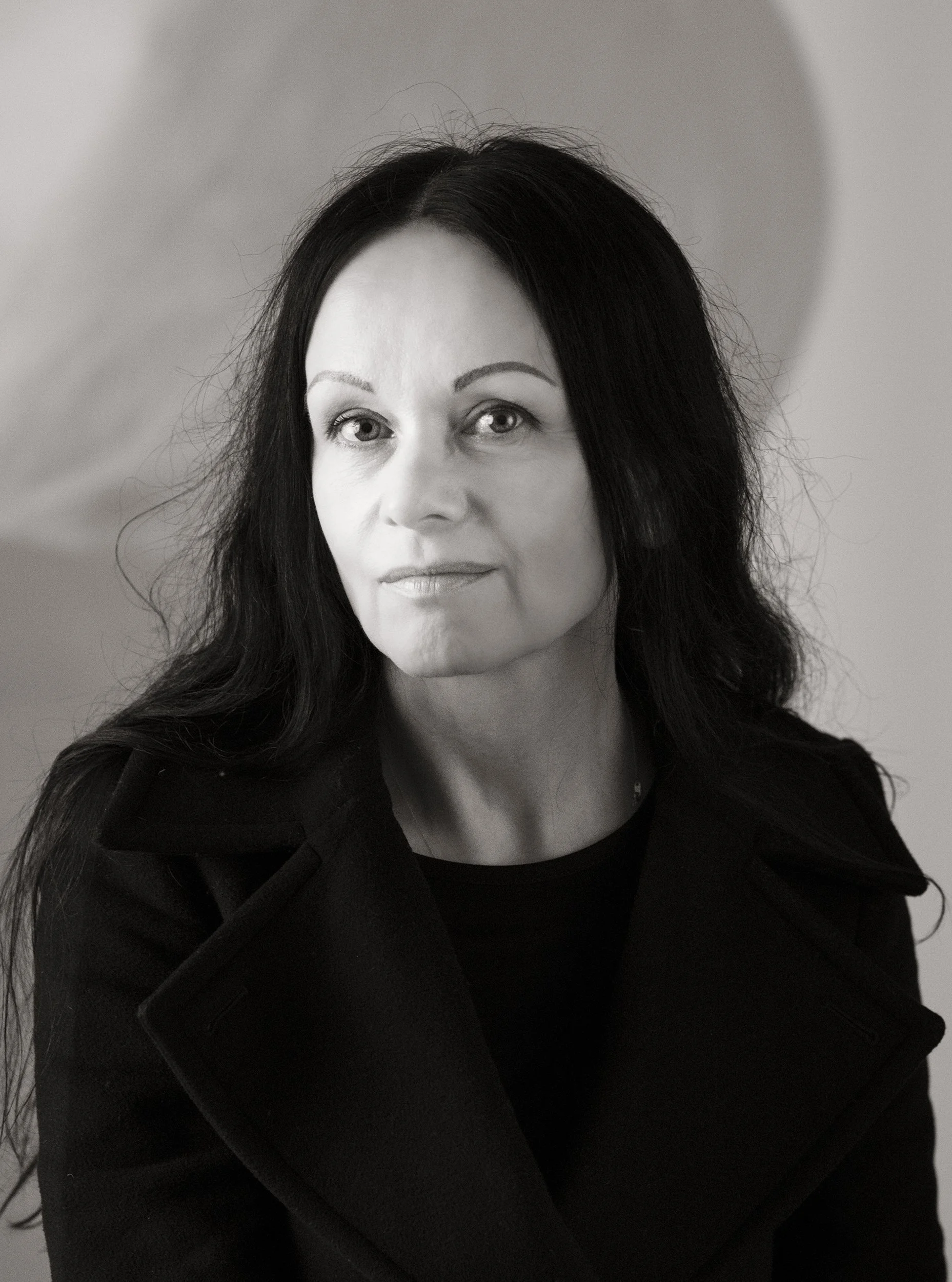
Photo by Paul Takeuchi, 2021
Monika Weiss to polsko-amerykańska artystka interdyscyplinarna i kompozytorka dźwięku, tworząca instalacje oparte na performensie, filmy, kompozycje muzyczne, projekty w przestrzeni publicznej, rzeźby oraz rysunki. Jej prace znajdują się w kolekcjach publicznych, takich jak Frost Art Museum, CIFO Cisneros Fontanals Art Foundation oraz CSW Zamek Ujazdowski. Do jej najnowszych projektów należy rzeźba dźwiękowa Metamorphosis-Przemiana, która w 2024 roku weszła w skład stałej kolekcji Centrum Rzeźby Polskiej w Orońsku; siostrzana wersja tej instalacji była prezentowana w Laumeier Sculpture Park (2024–2025). Od 2023 roku dokumentacja twórczości Weiss oraz związana z nią korespondencja przechowywane są w Archives of American Art, Smithsonian Institution, stanowiąc część archiwum historyczki sztuki Julii P. Herzberg.

Urodzona i wykształcona w Warszawie Monika Weiss od 2000 roku mieszka i tworzy w Nowym Jorku. Posługując się choreografią „powolnego czasu”¹ i tworząc prace dźwiękowe typu site-specific — często wywodzące się z jej własnych improwizacji fortepianowych — Weiss zgłębia tematykę pamięci zbiorowej i traumy, często zapraszając inne kobierty do interpretacji jej choreografii powolnego ruchu oraz muzyki wokalnej. Zakorzeniona w archaicznych rytuałach lamentacyjnych i kładąca nacisk na wspólnotowy gest obecności, jej sztuka stanowi poetycką odpowiedź na historię i mitologię. W przygotowaniu znajduje się projekt w przestrzeni publicznej zatytułowany Nirbhaya — pomnik/antypomnik poświęcony ofiarom przemocy ze względu na płeć, planowany na placu Dag Hammarskjöld Plaza, w pobliżu siedziby Organizacji Narodów Zjednoczonych. Na początku 2026 roku Streaming Museum zaprezentowało premierowo jej multidyscyplinarną pracę Arkhe—The Lost Canto. W uznaniu wkładu w kształtowanie krajobrazu kulturowego, w 2026 roku artystka została uhonorowana tytułem „Kobiety Wybitnej” (Woman of Distinction) przez Zgromadzenie Stanowe Nowego Jorku (73. Dystrykt), reprezentujące społeczność obejmującą m.in. siedzibę Organizacji Narodów Zjednoczonych.

Twórczość artystki została udokumentowana w monografii z 2021 roku, zawierającej eseje brytyjskiej historyczki sztuki Griseldy Pollock oraz kuratora nowojorskiego muzeum The Metropolitan Museum of Art, Marka McDonalda. Twórczość Weiss była prezentowana w instytucjach takich jak  Whitney Museum, Frost Art Museum, North Dakota Museum of Art, Museo de la Memoria y los Derechos Humanos, Frauenmuseum, Kunsthaus Dresden, Stavros Niarchos Foundation, Streaming Museum, CSW Zamek Ujazdowski oraz WhiteBox. Artystka jest  profesorką zwyczajną w Sam Fox School of Design & Visual Arts na Washington University in St. Louis. W ramach cyklu Artists on Artworks, The Metropolitan Museum of Art opublikowało w 2021 roku film, w którym Monika Weiss analizuje zagadnienia traumy i gestu w twórczości graficznej Francisco Goyi, w kontekście jej własnej sztuki intermedialnej. Choć Weiss znana jest przede wszystkim jako artystka wizualna i dźwiękowa, przez zajmowała się również muzyką. W 2022 roku nakładem Infrequent Seams ukazał się jej album zatytułowany Monika Weiss – Metamorphosis/Nirbhaya.
Przypisy:
Termin „slow time” został użyty w odniesieniu do twórczości artystki przez Guya Bretta w eseju o jej twórczości „Time Being”, opublikowanym po raz pierwszy w monografii Monika Weiss: Five Rivers (Lehman College Art Gallery, 2005), a następnie wznowionym w książce Bretta The Crossing of Innumerable Paths: Essays on Art (Ridinghouse, 2019).
“For Weiss, drawing embodies and expresses the passage of time, repetition, suggestion, and repercussion; while also celebrating the facture of media (the possibilities that physical materials allow). In this way, the artist’s practice has its basis in traditional methods, where drawing ‘gives credibility to all other media imposed.’ Unlike other elements of her work — digital images, words, music and sound — drawing, through asserting its authority, implies permanence, but this too can dissipate and become a vestige where the mark becomes a trace. Weiss’ drawing oscillates between proposal and presence, the allusive and the tangible where it competes (not in a precocious way) to establish its unassailable position in the consciousness mediated by the artist.” - Mark McDonald, “Drawing Consciousness: Monika Weiss”, in Monika Weiss. Nirbhaya, Centre of Polish Sculpture in Orońsko, 2021 [to read full essay by Mark McDonald, in English and Polish, click here ]
“W sztuce Weiss rysunek ucieleśnia upływ czasu, powtarzalność, sugestię, a jednocześnie proces rysowania to celebracja techniki jako takiej, odkrywanie fizycznych możliwości użytych materiałów. W tym sensie praktyka artystki opiera się na metodach tradycyjnych, w których rysunek „potwierdza wiarygodność wszystkich użytych mediów”. W odróżnieniu od innych elementów składających się na jej prace — obrazów cyfrowych, słów, muzyki i dźwięku — rysunek jako integralna część jej twórczości, sugeruje pewnego rodzaju trwałość czy też trwanie, a jednocześnie — zanikając, staje się pozostałością, śladem wykonanego znaku. Rysunek u Weiss oscyluje między sugestią a obecnością, aluzją i namacalnością, jakby starał się ugruntować (choć nie na siłę) swą niekwestionowaną pozycję w zapośredniczonym przez artystkę przepływie świadomości.” - Mark McDonald, “Rysunki aktywujące świadomość: Monika Weiss”, w Monika Weiss. Nirbhaya, Centrum Rzeźby Polskiej w Orońsku, 2021 [by przeczytać cały tekstMarka McDonalda, po angielsku i po polsku, kliknij tutaj ]
“Monika Weiss’s works have long solicited our attention to historical events: forgotten, remembered, not yet mourned, or immemorial, so that we experience their condition affectively through a musically choreographed image of time: time is both her frame and a medium.” - Griselda Pollock, “The Fidelity of Memory in an Endless Lament”, in Monika Weiss. Nirbhaya, Centre of Polish Sculpture in Orońsko, 2021 [to read full essay by Griselda Pollock, in English and Polish, click here ]
“Prace Moniki Weiss, filmy i performance, już od lat kierują nas ku wydarzeniom historycznym: tym zapomnianym i tym pamiętanym, lecz nie opłakanym, odwiecznym, byśmy mogli doświadczyć ich osobiście dzięki muzycznie wychoreografowanemu obrazowi czasu: bowiem czas jest tu ramą a zarazem medium dzieła.” - Griselda Pollock, “Wierność pamięci jako nieustający lament”, w Monika Weiss. Nirbhaya, Centrum Rzeźby Polskiej w Orońsku, 2021, w tłumaczeniu Izabeli Suchan [by przeczytać cały tekst Griseldy Pollock, po angielsku i po polsku, kliknij tutaj]