Drawing Room, New York (2003)
DRAWING ROOM
Achea Rheon: River of Sorrow
2003
Paper, graphite, sound, performance, with participation of pedestrians
ESSAY
In one of the artist’s earliest performances, Drawing Room (Achea Rheon: River of Sorrow) at the Whitney Museum of Contemporary Art in 2003, the gallery floor was covered with white photographic paper upon which the artist lay holding sticks of black charcoal in both hands drawing around her body. The use of two hands is significant for it relates to another of the artist’s principal concerns, music, and in particular the action involved in playing the piano. Two hands divide the act of drawing, denying the traditional one-handed method that determines the relationship between the artist, the surface and the subject. Other sticks were scattered on the paper, issuing an invitation for children to participate. Some imitated the artist, others struck out on their own path [fig. 9]. A video camera positioned above the participants projected footage onto the wall, thereby collapsing the actions with their presentation. The aerial view is present throughout Weiss’ work, where the separation of space effects a form of disembodiment (ascending and descending), as if the viewer is witnessing actions at a remove, when they are immediately before them. Drawing Room was organic. Multi-layered repeated lines defined the participant’s physical experience, capturing responses to an ostensibly shared act that was described by the artist as the ‘quietly floating waters of a river’ (Achea Rheon). (Mark McDonald, Drawing Consciousness: Monika Weiss, 2021)
To read full essay click here.
EXHIBITIONS
Family Day, curated by Mayrav Fisher, Whitney Museum of American Art, New York, 2003

Monika Weiss, Drawing Room, Whitney Museum of American Art, New York, 2003
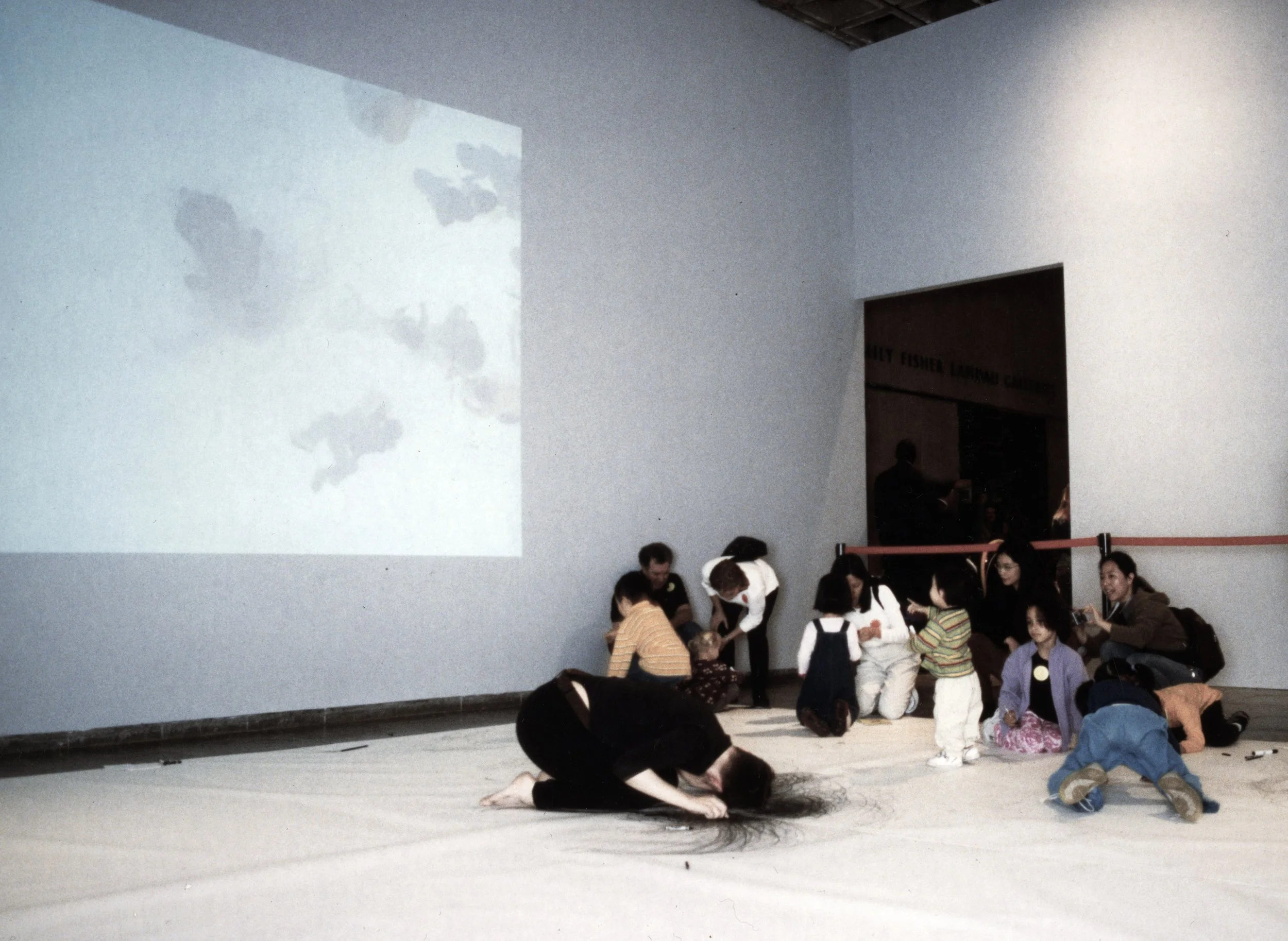
Monika Weiss, Drawing Room, Whitney Museum of American Art, New York, 2003
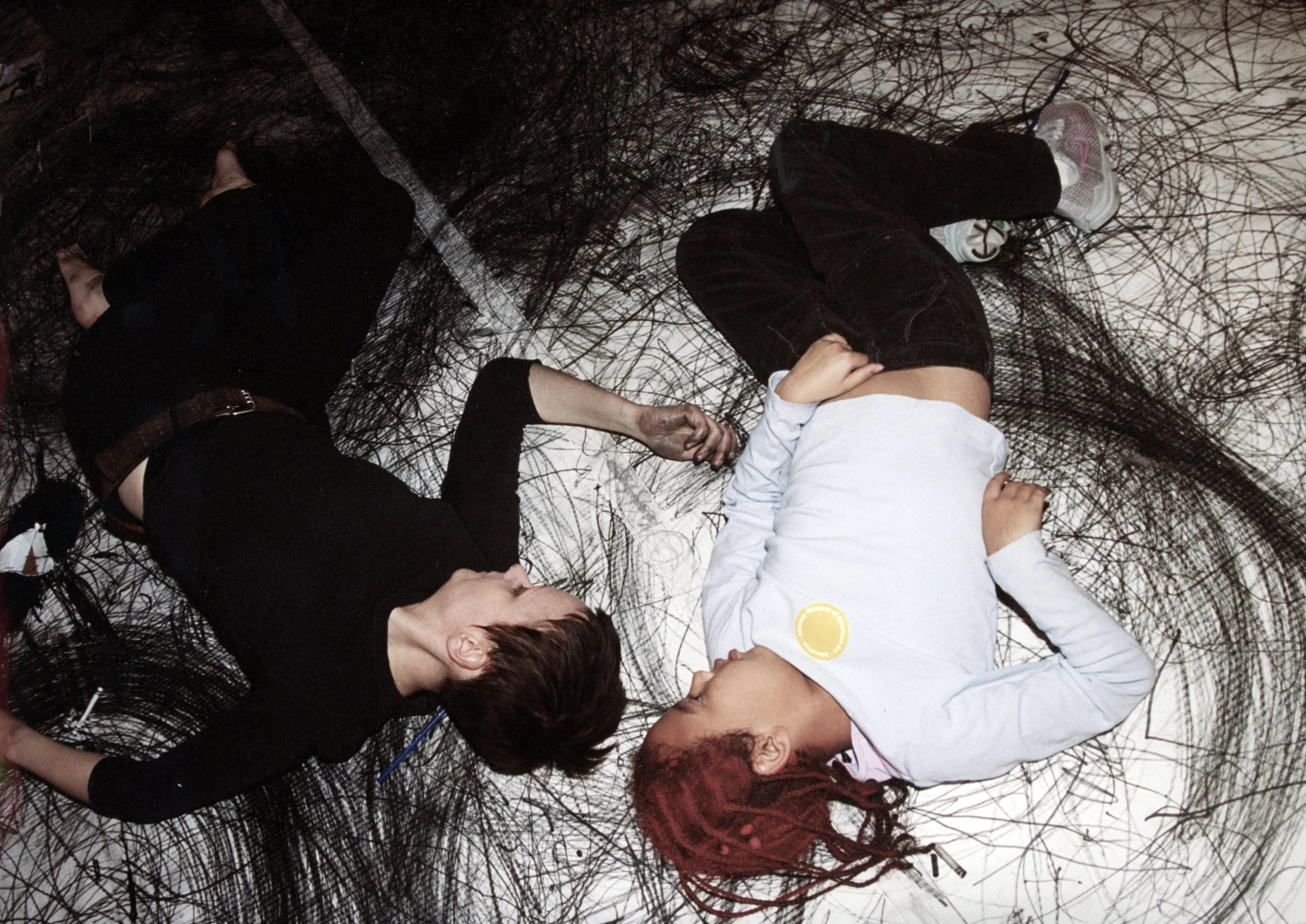
Monika Weiss, Drawing Room, Whitney Museum of American Art, New York, 2003